If you are drawn to homes with real architectural personality, Mount Baker gives you two especially compelling paths: Craftsman houses with rich original detail and midcentury homes with clean lines, light, and livability. Both styles show up here for good reasons tied to the neighborhood’s development history, and both can offer strong long-term appeal when you understand what drives value. If you are buying, selling, or simply sizing up the market, this guide will help you see how style, condition, and location come together in Mount Baker. Let’s dive in.
Why These Styles Matter in Mount Baker
Mount Baker developed largely between 1910 and 1929, and Seattle’s historic context for the neighborhood notes that much of the new housing in the 1920s remained Craftsman, alongside increasing Colonial Revival and Tudor Revival influence. That early development pattern helps explain why Craftsman homes still shape so much of Mount Baker’s visual identity today.
The same historic survey also notes that Mount Baker has more elaborate and architect-designed housing than many other southeast Seattle neighborhoods. It describes the area as an early planned residential community whose layout reflects the site’s topography and natural setting, which adds to the neighborhood’s distinct feel and long-standing appeal.
Midcentury homes are a smaller part of the housing stock, but they are still part of the story. According to the same Seattle historic context, postwar years brought infill single-family housing, apartment buildings along arterials, and some modern architect-designed homes, including the Milton Stricker houses from 1968.
Craftsman Homes in Mount Baker
What defines a Craftsman home
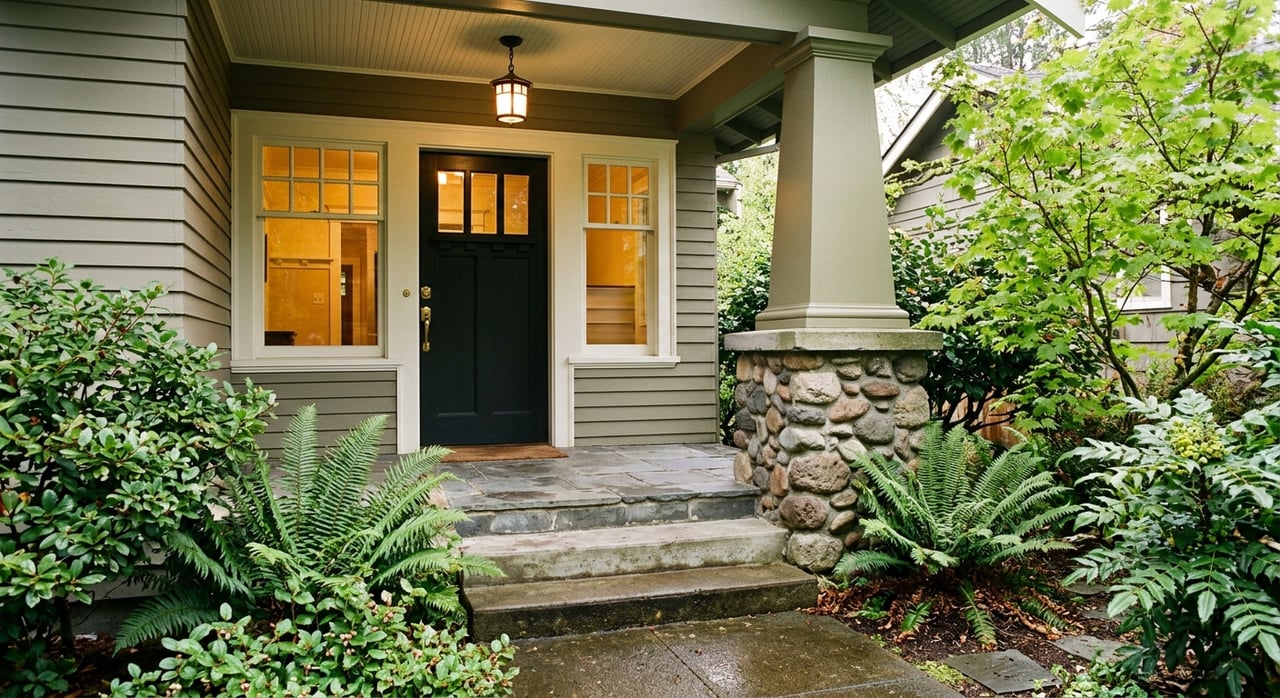
Craftsman bungalows are typically one to one-and-a-half stories with low-pitched roofs, wide overhanging eaves, exposed rafter tails, and large front porches. You will also often see tapered porch columns and natural exterior materials such as brick, stucco, clapboard, shingle, or stone, based on Washington State DAHP guidance.
Inside, Craftsman homes often feel more open than their exterior footprint suggests. Common features include open living and dining areas, built-in bookcases or cabinets, wood paneling, hardwood floors, and substantial trim.
In Mount Baker specifically, builder and pattern-book examples by Andrew Peterson and Jud Yoho are documented in the same DAHP material. That helps reinforce the neighborhood’s strong Craftsman identity and gives buyers and sellers useful context for what makes certain homes stand out.
Why buyers are drawn to Craftsman homes
For many buyers, Craftsman appeal starts with character you can see and feel right away. Original millwork, built-ins, porches, and defined public spaces can create a sense of warmth that newer homes often try to imitate.
There is also a practical side to the appeal. The layouts can offer comfortable everyday living, and the architectural details often give a home a sense of permanence that resonates in Seattle’s older in-city neighborhoods.
Midcentury Homes in Mount Baker
What defines a midcentury home
In King County and the broader postwar Seattle area, midcentury houses often emphasize open or roomy floor plans, large picture windows, sliding glass doors, low-pitched roofs, and a strong indoor-outdoor relationship. The King County midcentury residential context statement also notes post-and-beam or light-framed construction, plus carports or integrated garages as common features.
Many of these homes were built as single-story residences, which can make them adaptable for aging in place. Buyers also tend to appreciate the natural light, clean geometry, and connection to decks, patios, or yard space that midcentury design often delivers.
Why midcentury homes stand out
Midcentury homes in Mount Baker are less common than Craftsman houses, which can make them especially interesting when they come to market. Their value often comes from design clarity, livable flow, and how well the home retains its original spirit while accommodating modern updates.
The same DAHP context notes that common updates include electrical and mechanical upgrades, improved lighting and heating, deck or patio additions, and carport or garage conversions. In other words, these homes often reward thoughtful improvements that support how people live today.
How Style Connects to Value
Craftsman demand in the Seattle market
Style alone does not determine price, but it absolutely shapes demand. In the broader Seattle market, Windermere’s 2025 Seattle Metro report says the citywide median sale price was $985,000, 55% of homes sold within the first 10 days, and 64% sold at or above list price.
That same report also cites NWMLS data showing that Craftsman was the region’s most common sold style over the last 10 years, with 112,472 sales. In that dataset, the median price for Craftsman homes rose from $370,000 in 2013 to $701,828 in 2023, which points to sustained buyer demand for the style across the region.
That does not mean every Craftsman commands a premium simply because of its architecture. Condition, location within the neighborhood, updates, lot characteristics, and presentation still matter. Still, the broader demand trend helps explain why well-preserved Craftsman homes often attract strong attention.
Midcentury value is often condition-driven
Midcentury homes tell a slightly different value story. Based on the style features and market patterns in the research, buyers often respond most strongly to good original character, strong natural light, functional floor plans, and well-executed updates.
Heavily altered homes may lose some of the design coherence that makes the style attractive in the first place. In practical terms, that means a midcentury home with thoughtful system upgrades and a clear architectural identity may compete better than one that has been extensively remodeled without regard to the original design.
What Buyers Should Look For
If you are considering a Craftsman or midcentury home in Mount Baker, it helps to separate style appeal from ownership reality. A beautiful house can still require substantial work, and a more modest-looking home may offer better long-term value if the fundamentals are strong.
Craftsman buyer checklist
When touring a Craftsman home, pay close attention to:
- Original wood trim and built-ins
- Porch condition and structural integrity
- Window condition and whether original details remain
- Exterior cladding materials and maintenance history
- Hardwood floors, millwork, and interior character elements
- How updates fit with the home’s original design
For Craftsman homes, preservation guidance points to the integrity of original materials and details as a major value factor. Wood trim, porch posts, built-ins, windows, and exterior cladding can all shape both appeal and maintenance needs.
Midcentury buyer checklist
When evaluating a midcentury home, focus on:
- Electrical and mechanical system updates
- Heating and lighting improvements
- Window placement and natural light quality
- Indoor-outdoor flow to patios, decks, or yard space
- Whether additions or conversions respect the original layout
- Overall design consistency rather than just cosmetic finish
According to the DAHP midcentury guidance, system replacements, efficiency improvements, accessibility upgrades, and careful additions are common priorities. That makes it especially important to look beyond surface-level finishes and understand how the home has been improved over time.
What Sellers Should Know Before Listing
If you own one of these home styles in Mount Baker, your goal is not simply to say the home is charming or stylish. Your goal is to show buyers why the architecture matters and how the home has been cared for.
For Craftsman homes, that often means highlighting intact original features, quality restoration work, and updates that support the home’s historic character. For midcentury homes, it usually means emphasizing light, floor plan, design continuity, and practical upgrades that improve comfort without stripping away identity.
A strong pricing strategy matters too, especially in a market where buyers move quickly but still compare condition very carefully. In a neighborhood with architectural variety, pricing should account for style, level of preservation, update quality, and the specific buyer pool the home is likely to attract.
The Mount Baker Advantage
Mount Baker stands out because it offers more than a single look or era. Its early planned development, topographic setting, and mix of architecturally notable homes create a neighborhood where design still carries weight.
For buyers, that means you can find homes with true visual character and understand where that character comes from. For sellers, it means thoughtful positioning can make a meaningful difference when you bring a distinctive home to market.
If you are weighing a purchase, planning updates, or preparing to sell, working with a broker who can connect architecture, condition, and market data is essential. That is where a calm, analytical approach can help you make a better decision with less guesswork. If you want tailored guidance on how a Mount Baker Craftsman or midcentury home fits today’s market, connect with Brad Hinckley to request an instant home valuation or schedule a market strategy consultation.
FAQs
What makes Mount Baker Craftsman homes different from other Seattle homes?
- Mount Baker developed largely between 1910 and 1929, and the neighborhood is documented as having more elaborate and architect-designed housing than many other southeast Seattle areas, which helps give its Craftsman homes a distinct presence.
What features should you expect in a Mount Baker Craftsman home?
- Common features include low-pitched roofs, wide eaves, exposed rafter tails, front porches, tapered columns, natural materials, built-ins, hardwood floors, and substantial wood trim.
What features define a Mount Baker midcentury home?
- Midcentury homes in Mount Baker and greater King County often include open floor plans, large picture windows, sliding glass doors, low-pitched roofs, indoor-outdoor flow, and carports or integrated garages.
How does home style affect value in Mount Baker?
- Craftsman homes benefit from sustained regional demand, while midcentury homes are often valued based on condition, original character, natural light, functional layout, and quality of updates.
What should you inspect before buying an older Mount Baker home?
- For Craftsman homes, focus on original materials, porches, windows, trim, and cladding; for midcentury homes, pay close attention to electrical, mechanical, heating, lighting, and whether changes preserve the home’s design integrity.