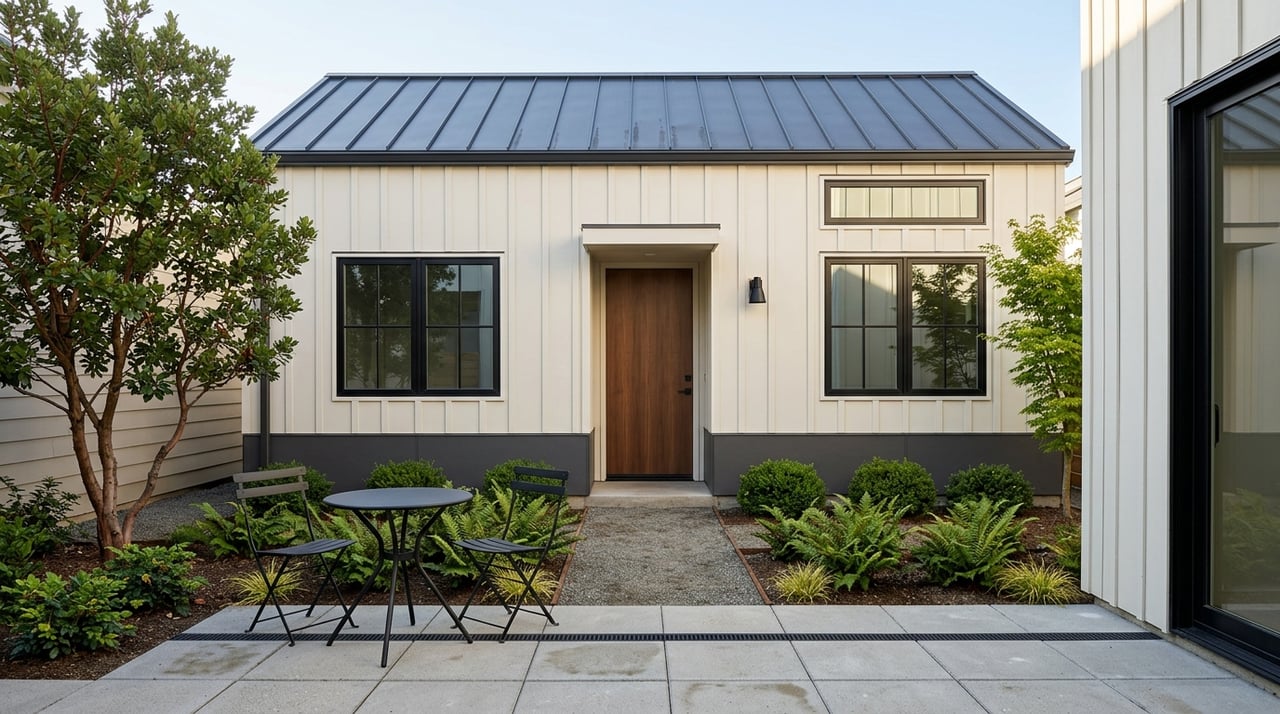
If you are shopping in Phinney Ridge, an ADU or DADU can look like a smart answer to a lot of real-world needs. You may want space for guests, room for multigenerational living, a private home office, or the potential for rental income in a high-cost market. The key is knowing which features actually matter to buyers and lenders, and which details can create risk instead of value. Let’s dive in.
Why ADUs Matter in Phinney Ridge
Phinney Ridge sits in a strong, high-priced Seattle market, which helps explain why buyers often pay close attention to homes with flexible extra space. Recent local market data points to a seller’s market environment and median pricing near the upper end of Seattle neighborhood ranges, which can make added living flexibility more appealing in practice. That does not prove a set ADU price premium, but it does support why these properties draw interest in a neighborhood like Phinney Ridge.
Seattle has also seen sustained ADU activity since its 2019 rule changes. According to the city’s 2024 ADU annual report, permit volume remained above roughly 900 units per year from 2022 through 2024, with much of that activity concentrated in Neighborhood Residential zones where supply is limited and home prices are high.
Start With Legal Status
For most buyers, the first question is simple: is the unit legal? Seattle states that ADUs are not legal unless they were established through the permit process, and that makes permit history one of the most important value drivers when you are evaluating a property.
This matters for financing as well as peace of mind. Freddie Mac notes that illegal ADU rental income cannot be used to help qualify a borrower for a loan, so a unit with unclear status can narrow your financing options and complicate underwriting.
If you are comparing two similar homes in Phinney Ridge, the one with a clearly permitted ADU or DADU will usually be easier to understand, easier to finance, and easier to resell. That clarity tends to matter more than flashy finishes alone.
What to verify before you buy
- Confirm the ADU or DADU was established through Seattle’s permit process
- Review available permit history and project documentation
- Make sure the space is more than an informal basement or garage conversion
- Ask how the unit may be treated in appraisal and underwriting
- Be cautious about income assumptions that are not well documented
Seattle’s Accessory Dwelling Unit guidance is a useful starting point for understanding legality and code requirements.
Buyers Want Flexible Living Space
The strongest ADU properties usually offer options, not a single narrow use case. Freddie Mac consumer research found that once people understood what an ADU is, the most common planned uses included hosting family or guests and earning rental income.
Seattle’s materials point to other common motivations too, including aging in place, multigenerational living, and disability-related needs. In practical terms, that means buyers often respond best to a unit that can work well for several future scenarios instead of being tailored too tightly to one person’s lifestyle.
A good ADU in Phinney Ridge should feel like space you can actually live in. It should not feel like leftover square footage with a hot plate and a door.
The Features Buyers Notice Most
When buyers walk through a home with an ADU or DADU, they tend to focus on livability. They want the unit to feel complete, comfortable, and private enough to support everyday use.
Freddie Mac’s ADU fact sheet highlights the kinds of characteristics appraisers consider, including size, room count, bedrooms, baths, condition, and market impact. Those same details shape buyer perception in a very direct way.
High-priority ADU features
- Separate entrance
- Functional kitchen
- Full bathroom or well-designed bath setup
- Adequate finished square footage
- Good natural privacy from the main home
- A layout that feels like a real home
- Consistent finish quality and obvious code compliance
These features matter because buyers typically see an ADU as an enhancement to the main property, not a full equivalent to the primary residence. A well-designed smaller unit often outperforms a larger but awkward one.
Why DADUs Often Stand Out
A DADU can have a clear appeal because it is located in a separate accessory structure. Seattle defines a detached accessory dwelling unit this way, and that physical separation often translates into better day-to-day privacy.
For buyers, that can make the use case easier to picture. A detached structure may feel more suitable for guests, a quieter workspace, or a longer-term housing arrangement that benefits from separation from the main home.
That does not mean an attached ADU cannot be highly attractive. It simply means a DADU often has a built-in privacy advantage that many buyers understand immediately when they tour the property.
Parking Usually Matters Less Than You Think
Some sellers assume an ADU must come with extra parking to appeal to buyers. In Seattle, that is often not the top concern.
The city states that parking is not required for ADUs. In many cases, buyers are more focused on legality, comfort, privacy, and layout than on whether the property adds another dedicated parking stall.
That is especially true when the ADU itself feels turnkey and easy to use. Buyers tend to forgive what is not required more easily than they forgive poor design or unclear permits.
Seattle Rules Shape Resale Potential
If you own a home in Phinney Ridge or are considering one with an ADU, current Seattle rules matter because they shape both utility and buyer expectations. The city’s updated framework allows up to two ADUs on the same lot as a principal dwelling unit, and either or both may be attached or detached.
Seattle also applies a 1,000-square-foot gross floor area cap and zone-based height standards under its updated code framework. The city aligned these rules with state law in 2025, and it notes that some older public-facing ADU materials may not yet reflect every current standard.
That is why feasibility should be checked carefully, especially if you are buying with future changes in mind. The most current code language is available in the city’s amended Chapter 23.44 materials.
What Helps Value Hold Up
The practical resale question is rarely just whether a property has an ADU. More often, buyers are asking whether the unit is legal, financeable, and easy to live with.
Freddie Mac notes that ADUs may increase long-term property and resale value, but appraisal support still depends on actual marketability and comparable data. That means buyers may discount units with unclear permits, awkward access, weak finish quality, or income projections that are hard to support.
In Phinney Ridge, the best-performing ADU listings are usually the ones that present the space clearly and honestly. Buyers respond well when they can see how the unit works, understand its legal status, and picture more than one practical use for it.
What tends to strengthen buyer appeal
- Clean permit history
- Clear separation and access
- Functional privacy between spaces
- Thoughtful design and finish consistency
- Flexible use for guests, work, or longer-term occupancy
- Realistic income assumptions, if income is part of the value story
What Buyers Should Ask in Phinney Ridge
If you are considering a home with an ADU or DADU, a few direct questions can help you avoid surprises. Start with the documentation, then move to how the unit functions in real life.
Ask whether the seller can provide permit records, when the unit was created, and whether any major upgrades were completed with approvals. Then look closely at access, privacy, layout, and whether the space feels truly independent.
You should also discuss financing early if you are counting on any rental offset. Freddie Mac makes clear that ADU income treatment depends on documentation and underwriting, so it is worth understanding that before you write an offer.
What Sellers Should Highlight
If you are selling a Phinney Ridge home with an ADU or DADU, your strongest strategy is usually straightforward presentation. Buyers want a unit that feels legitimate, useful, and easy to understand.
That means highlighting permit history, functional layout, privacy, and flexibility of use. If the property includes a detached unit, make that separation easy to appreciate through the listing narrative and showing flow.
This is where clear pricing, positioning, and buyer education matter. In a nuanced property category like this, strong marketing is not just about exposure. It is about helping buyers understand how the ADU fits into the total value of the home.
If you are weighing a purchase, preparing a sale, or trying to understand how an ADU or DADU affects value in Phinney Ridge, working with a broker who can interpret the details can reduce risk. Brad Hinckley brings a calm, data-driven approach to Seattle real estate, with hands-on guidance for buyers and sellers navigating complex property decisions.
FAQs
What is the difference between an ADU and a DADU in Seattle?
- An ADU is an accessory dwelling unit on the same lot as the main home, while a DADU is a detached accessory dwelling unit located in a separate accessory structure, according to Seattle’s ADU guidance.
Why does legal status matter for an ADU in Phinney Ridge?
- Legal status matters because Seattle says ADUs must be established through a permit process, and Freddie Mac notes that illegal ADU rental income cannot be used to qualify for a loan.
What ADU features do buyers usually want in Phinney Ridge?
- Buyers typically look for a separate entrance, kitchen, bathroom, finished living area, privacy, and a layout that feels complete and functional.
Does a DADU add more appeal than an attached ADU in Seattle?
- A DADU can appeal to buyers because its separate structure often provides stronger privacy and clearer use for guests, work, or longer-term living arrangements.
Is parking required for an ADU in Seattle?
- No. Seattle states that parking is not required for ADUs, so many buyers focus more on legality, comfort, and design.
How many ADUs can a Seattle property have?
- Under Seattle’s current code framework, a lot with a principal dwelling unit may have up to two ADUs, and either or both may be attached or detached, subject to applicable rules.
What should buyers verify before buying a home with an ADU in Phinney Ridge?
- Buyers should verify permit history, legal status, documentation, likely appraisal treatment, and whether any income assumptions are realistic and supportable.
Where can homeowners check current Seattle ADU rules?
- Homeowners can start with Seattle SDCI and the city’s ADUniverse resources, especially because some older materials may lag behind 2025 code updates.